The Flash Technique: How It Supports EMDR Therapy
A gentler way to lower the intensity of traumatic memories, used before, alongside, or instead of standard EMDR processing.
Road to Healing Counseling
Trauma Treatment is a Journey to Reclaim Your Story

Dr. Najmeh Hourmanesh, a licensed psychologist and EMDRIA Approved Consultant in Millcreek, Utah, writes here about trauma recovery, EMDR, play therapy, and family healing. These articles are for children, teens, adults, and families seeking support, and for clinicians looking to deepen their trauma-focused practice.
A gentler way to lower the intensity of traumatic memories, used before, alongside, or instead of standard EMDR processing.
How do you help your child when they cannot find the words for something frightening? As a parent, you may want to understand what happened—and wonder how much your child needs to say in therapy. EMDR storytelling for children offers a developmentally adapted way to approach difficult experiences without expecting a detailed account on demand. …
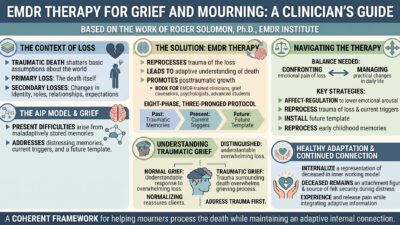
A review of Roger M. Solomon’s EMDR Therapy Treatment for Grief and Mourning (Oxford University Press, 2024), Part 2. Roger Solomon, a clinical psychologist and senior faculty member at the EMDR Institute, reviews four models of grief in his book, EMDR Therapy Treatment for Grief and Mourning: Transforming the Connection to the Deceased Loved One. …
Transforming the Connection to the Deceased Loved One by Roger M. Solomon; published January 30, 2024, by Oxford University Press (Part 1) For many, the death of a loved one is a traumatic event that can shatter basic assumptions about the world and their role in it. The death itself is considered a primary loss, …
Several family members may be affected by the same traumatic or overwhelming event, such as community violence, medical crises, death or illness in the family, accidents, or natural disasters. Although I sometimes process trauma separately with each family member using Francine Shapiro’s standard individualized EMDR protocol, I more often begin with a step-wise family approach …
I’m excited to begin this blog. I’m a psychologist who specializes in evidence-based therapies for children, teens, and adults who have been through traumatic experiences. One question I often hear from clients during intake is, “Is it really helpful to work through painful experiences?” Some people wonder why they shouldn’t just “let sleeping dogs lie.” …